
Imagine showing up to your first dealmaking role expecting polished systems, structured workflows, and sophisticated transaction management…
…and instead finding inboxes full of buried email threads, Dropbox links nobody could track, duplicate PDFs, manual NDA follow-ups, and partners asking:
“Wait… who actually has the latest version?”
Wouldn't that surprise you?
Especially when the deals themselves were serious.
Real companies. Real buyers. Real money.
But somewhere between the teaser, the NDA, the CIM, diligence requests, buyer questions, and version_final_FINAL_v12(14).pdf… the process always seemed to break down into organized chaos.
And the strange part?
Everyone acted like this was normal.
Associates rebuilt trackers every week. Buyers asked for files already sent. Sellers waited for updates nobody had yet. Momentum disappeared quietly between stages.
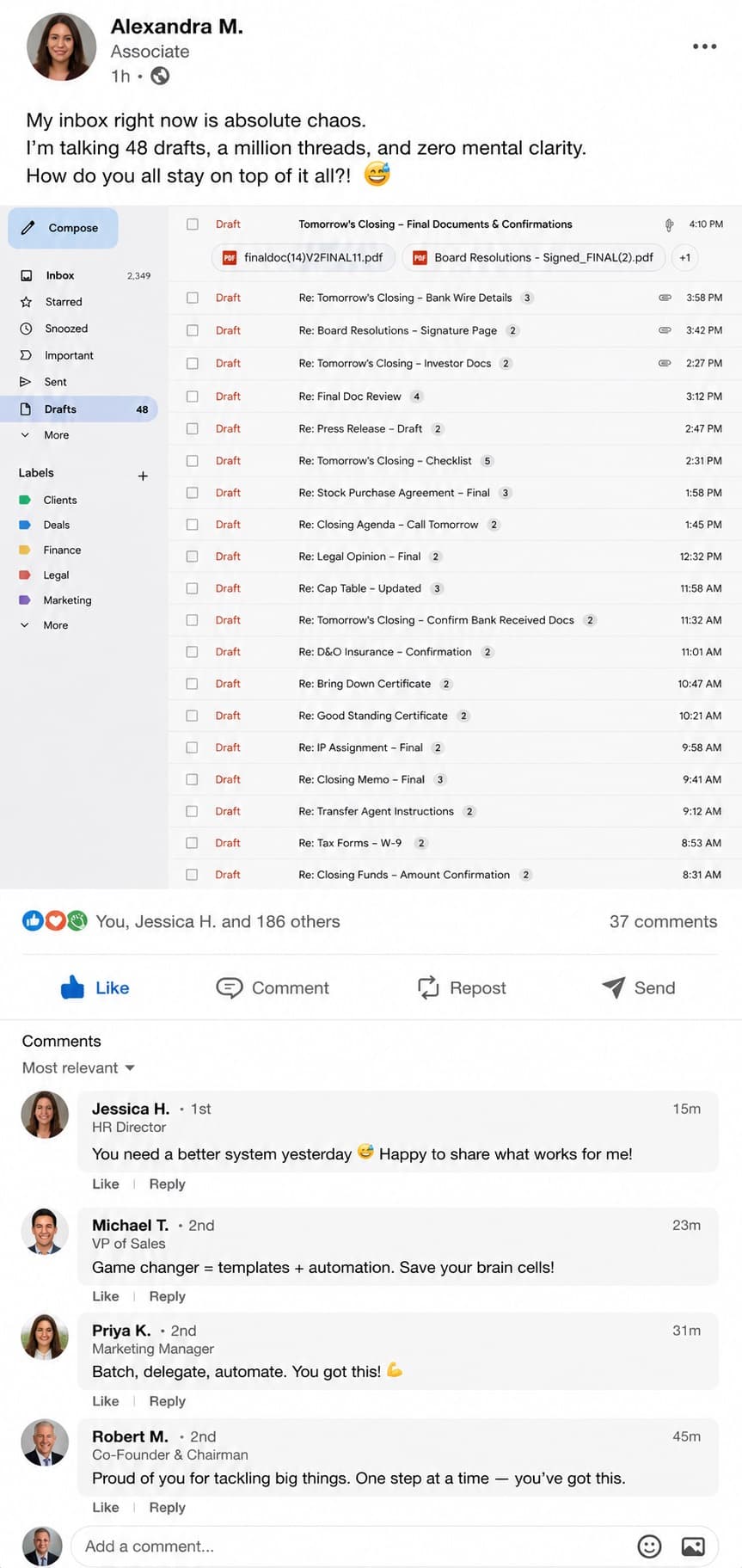

Wouldn't it be great if there was a real system for all of this?
Not another file-sharing portal.
Not another place to upload PDFs.
An actual system built around how deals move:
Opportunity Brief
— create buyer interest
Buyer Verification
— qualify serious buyers
Deal Book
— present the opportunity clearly
Intelligence Room
— organize diligence and buyer activity
Transaction Readiness
— keep momentum moving toward close
A place where buyers know where everything is.
Advisors know who's engaged.
Sellers stop wondering where the deal actually stands.
That's the idea behind DealRoom.
Guided Deal Progression™ wasn't created because the industry needed more software.
It was created because too many good deals were still being managed through memory, inboxes, and manual coordination pretending to be a system.

And honestly… if somebody finally built a better way to run deals, maybe it doesn't matter where the idea came from.
Alex isn't real in the traditional sense. She's stitched together from conversations, observations, and the kind of industry folklore that survives because it feels a little too true — a lot like version_final_FINAL_v12(14).pdf.